
 Save to Pinterest
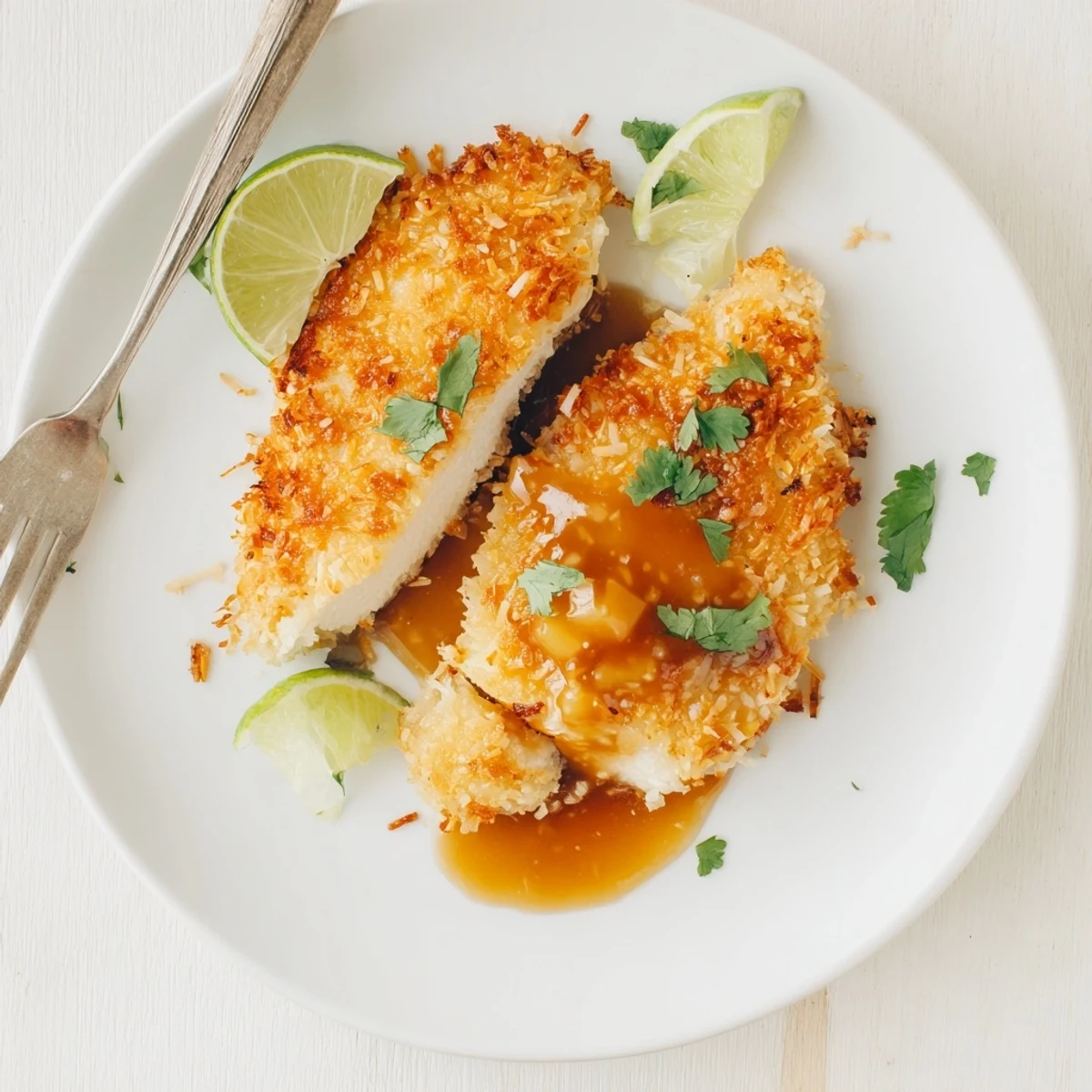
 Juicy chicken breasts are coated in flour, egg, and a coconut-breadcrumb mix, seared in coconut oil, then finished in a hot oven until cooked through. A quick stovetop sauce blends apricot preserves with soy, rice vinegar, Dijon, garlic and ginger into a glossy sweet-tangy glaze. Total hands-on time about 20 minutes; bake 15–18 minutes. Serve with cilantro, lime wedges, jasmine rice or a crisp salad. Swap gluten-free flour and crumbs to keep it gluten-free; add toasted cashews for extra crunch.
The sizzle of coconut hitting a hot skillet is one of those sounds that instantly pulls everyone into the kitchen, and this coconut chicken with apricot sauce earned its spot in my weekly rotation after a friend begged for the recipe at a backyard dinner.
I once made a double batch for a potluck and watched three people hover over the platter until every last piece vanished, lime wedges and all.
Ingredients
- 4 boneless, skinless chicken breasts: Pound them to even thickness so they cook uniformly without drying out at the edges.
- 1 cup shredded unsweetened coconut: Unsweetened gives you a golden toast without burning, and the texture is far superior to sweetened flakes.
- 1/2 cup gluten-free breadcrumbs: These lighten the coconut crust so it adheres without becoming dense.
- 1/2 cup gluten-free flour: The first coat seals moisture in and gives the egg something to cling to.
- 2 large eggs: Beaten smooth, they act as the bridge between flour and coconut.
- 1/2 tsp salt and 1/2 tsp black pepper: Season the chicken directly before breading for flavor that reaches the meat.
- 2 tbsp coconut oil: It reinforces the coconut flavor in the crust while handling high heat beautifully.
- 1 cup apricot preserves: The backbone of the sauce, delivering fruity sweetness balanced by tang.
- 2 tbsp soy sauce: Adds savory depth that keeps the sauce from tasting like dessert.
- 1 tbsp rice vinegar: A bright hit of acidity that lifts every flavor around it.
- 1 tbsp Dijon mustard: Just enough emulsifying power and gentle heat to tie the sauce together.
- 1 clove garlic, minced: Fresh is nonnegotiable here for that aromatic punch.
- 1/2 tsp grated fresh ginger (optional): It adds warmth and a faint spice that plays beautifully with apricot.
- 2 tbsp chopped fresh cilantro (optional): A grassy, fresh finish that cuts through richness.
- Lime wedges: A squeeze right before eating wakes up the whole plate.
Instructions
- Preheat and prepare:
- Set your oven to 400°F and line a baking sheet with parchment paper so nothing sticks during the finish.
- Set up the breading line:
- Arrange three shallow dishes: flour in the first, beaten eggs in the second, and the coconut mixed with breadcrumbs in the third, keeping everything within arm's reach.
- Season and bread the chicken:
- Pat the chicken dry, sprinkle with salt and pepper, then work each piece through flour, egg, and finally the coconut mixture, pressing firmly so every inch is coated.
- Sear to golden perfection:
- Heat coconut oil in a large skillet over medium-high heat and sear each breaded breast for 2 to 3 minutes per side until the coconut turns a deep, fragrant gold, then transfer to your prepared sheet.
- Bake until juicy:
- Slide the sheet into the oven for 15 to 18 minutes, cooking until the centers are no longer pink and juices run clear when you cut into the thickest part.
- Simmer the apricot sauce:
- While the chicken bakes, combine apricot preserves, soy sauce, rice vinegar, Dijon mustard, garlic, and ginger in a small saucepan over medium heat, stirring until the mixture is smooth and thickened, about 4 to 5 minutes.
- Plate and garnish:
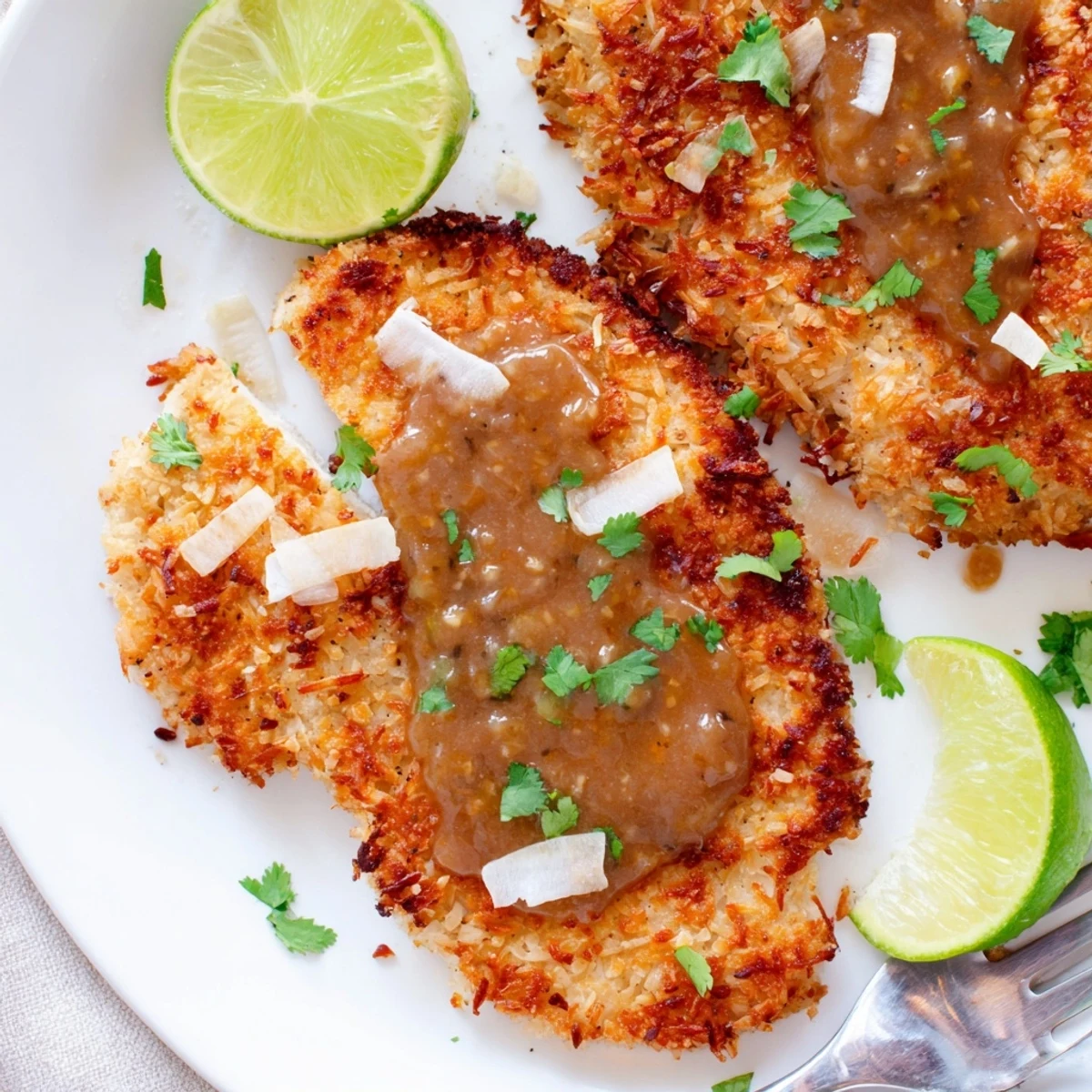
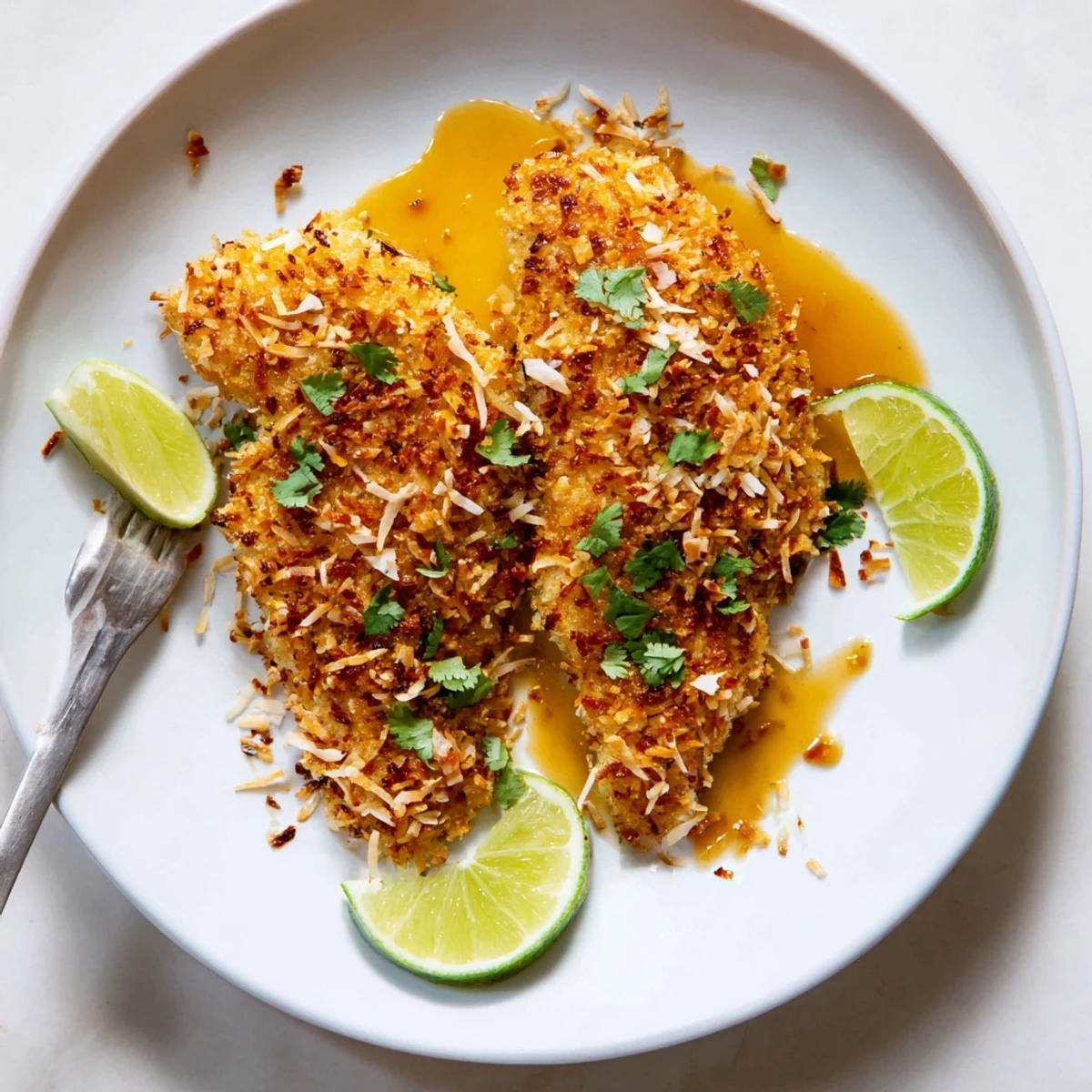
- Drizzle the warm sauce generously over each piece of chicken, scatter cilantro on top, and serve with lime wedges on the side for squeezing.
 Save to Pinterest
 The night I served this to my neighbor who claimed she hated coconut, she paused midbite, stared at the plate, and quietly asked if she could take the leftovers home.
What to Serve Alongside
Jasmine rice soaks up the apricot sauce like a sponge, and a simple green salad with a light vinaigrette keeps the plate from feeling heavy.
Making It Your Own
Toss chopped toasted cashews into the coconut mixture for extra crunch, or fold a pinch of red pepper flakes into the sauce if you want a gentle kick that complements the sweetness.
Storing and Reheating
Leftovers keep well in an airtight container in the refrigerator for up to three days, though the crust softens overnight. Reheat on a parchment-lined sheet at 375°F for about ten minutes to coax back some of that original crispness.
- Store the sauce separately so the chicken does not sit in liquid and turn soggy.
- Freezing is not recommended because the coconut coating loses its texture after thawing.
- Always check that the chicken reaches an internal temperature of 165°F before serving.
 Save to Pinterest
 This is the kind of dish that turns an ordinary evening into something worth savoring, one crispy, saucy bite at a time.
Recipe Questions & Answers
- → Can I use chicken thighs instead of breasts?
-
Yes—bone-in or boneless thighs add extra juiciness. Reduce oven time for thinner pieces or check internal temp of 165°F for doneness.
- → How do I keep the coconut coating crisp?
-
Press the coconut-breadcrumb mix firmly onto the meat, sear in a hot skillet to set the crust, then finish briefly in a hot oven. Avoid overcrowding the pan to prevent steaming.
- → What can I substitute for apricot preserves?
-
Use peach or apricot jam, or mix orange marmalade with a splash of rice vinegar and a pinch of mustard to mimic the sweet-tangy balance.
- → Is there a gluten-free option?
-
Yes—use gluten-free flour and gluten-free breadcrumbs. Confirm the soy sauce is labeled gluten-free or substitute tamari.
- → How should I reheat leftovers without soggy coating?
-
Reheat in a 350°F oven on a wire rack set over a baking sheet until warmed through; this preserves crispness better than the microwave.
- → Can the apricot sauce be made ahead?
-
Absolutely—sauce keeps refrigerated for up to 5 days. Rewarm gently on the stove before serving and whisk to restore gloss.