
 Save to Pinterest
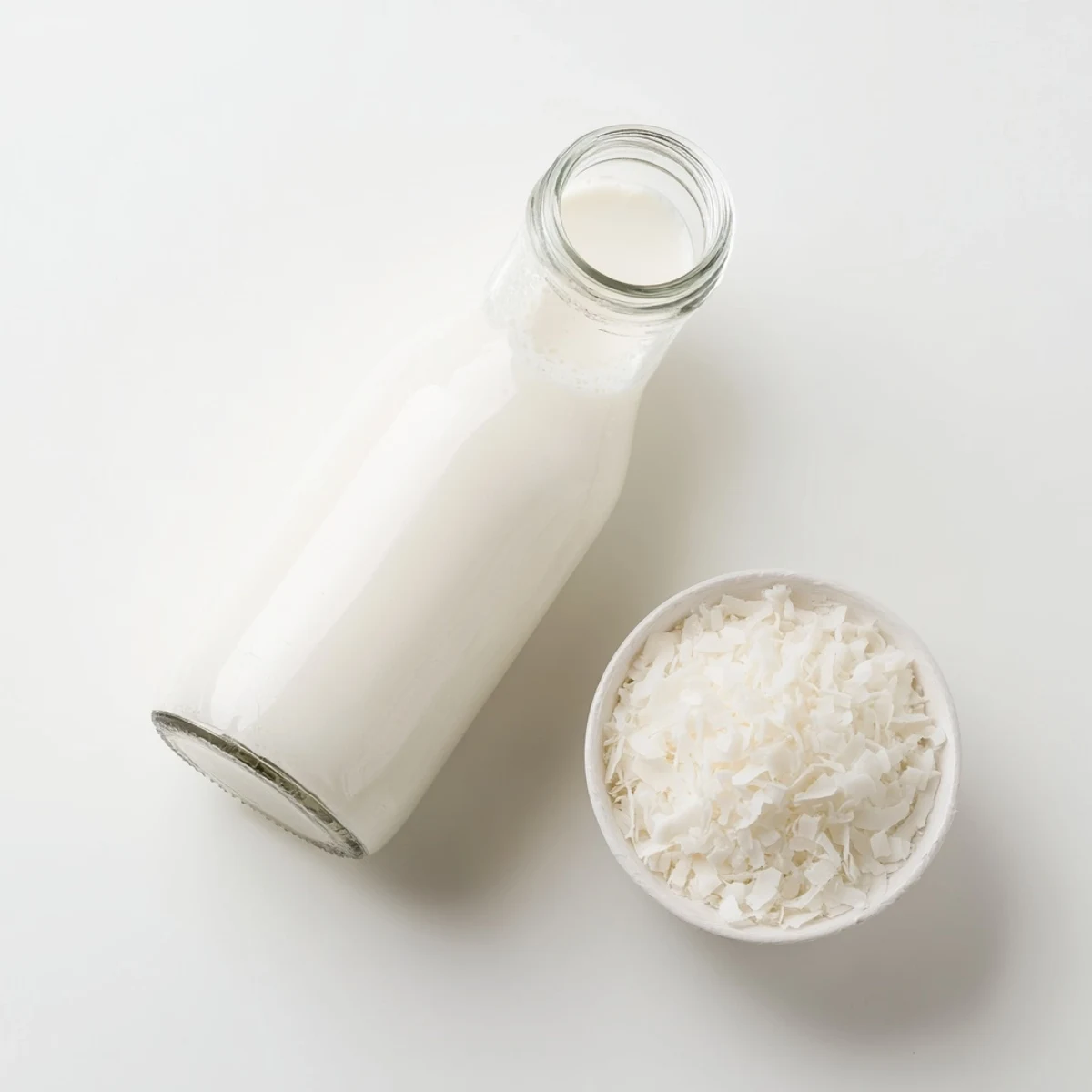
 Découvrez la simplicité de préparer votre propre lait de coco maison. En seulement 10 minutes et avec des ingrédients basiques, obtenez un breuvage crémeux et authentique sans additifs ni conservateurs. Cette préparation végétalienne s'intègre merveilleusement dans vos boissons chaudes, currys, smoothies ou desserts.
La technique demande simplement de mixer la noix de coco râpée avec de l'eau chaude, puis de filtrer le mélange. Le résultat se conserve 4 jours au réfrigérateur et offre une texture riche parfaitement adaptée à de multiples utilisations culinaires. La pulpe restante peut même être réutilisée en pâtisserie après séchage.
One rainy Sunday morning, I found myself staring at an empty carton in the fridge and a bag of shredded coconut in the pantry. Something clicked. Why not make my own coconut milk? The blender was already out from breakfast smoothies anyway.
Last summer, my friend Sarah came over for curry night and casually asked what brand of coconut milk I used. When I pulled out my homemade batch from the fridge, her jaw dropped. Now she texts me every week asking if I have any spare jars.
Ingredients
- 200 g unsweetened shredded coconut: The fine shreds blend more easily than flakes and release all their creamy goodness
- 1 liter hot water (not boiling): Water that is too hot can make the milk bitter, while too cold will not extract as much flavor
Instructions
- Blend it up:
- Toss the coconut into your blender and pour in the hot water. Let it sit for about two minutes to soften the shreds before blitzing on high speed for 2 to 3 minutes until everything looks creamy and white.
- Strain like you mean it:
- Pour the mixture through a clean nut milk bag or thin towel over a large bowl. Squeeze and press with your hands to get every last drop of liquid out.
- Bottle and chill:
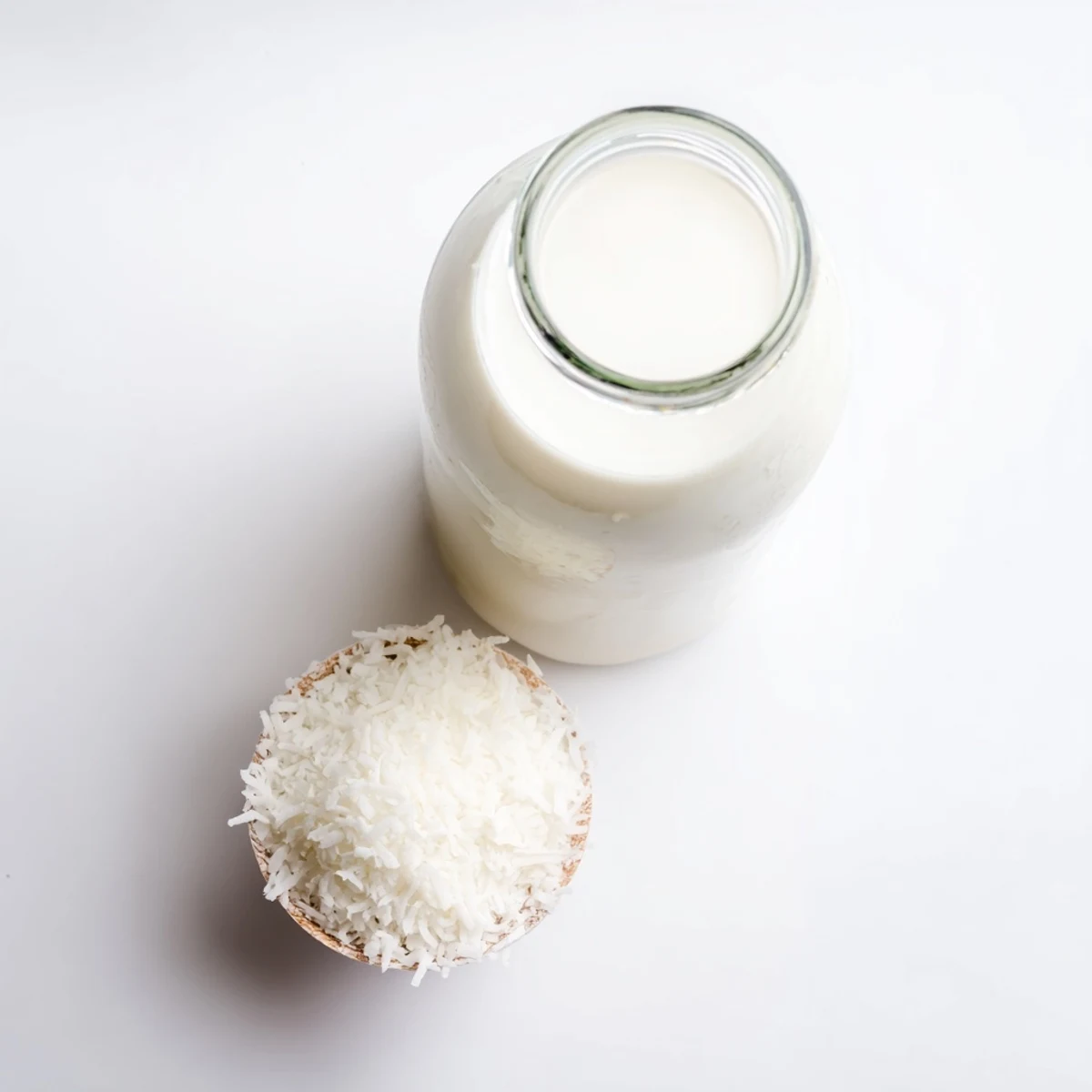
- Funnel the fresh coconut milk into a clean glass bottle and refrigerate immediately. Give it a good shake before each use as separation is totally natural.
 Save to Pinterest
 My daughter now requests this for her morning oatmeal every single day. Watching her stir it in and proclaim it tastes like vacation makes those ten minutes of prep feel absolutely worth it.
Sweet or Savory
I keep mine unsweetened for maximum versatility. A splash in curry brings that velvety richness without extra sugar, but for coffee or smoothies, a touch of maple syrup works beautifully.
Using the Leftover Pulp
Do not toss that squeezed coconut pulp. Spread it on a baking sheet and dry it at low temperature for toasted coconut flakes, or blend it into energy bites for extra fiber and texture.
Storage Tips
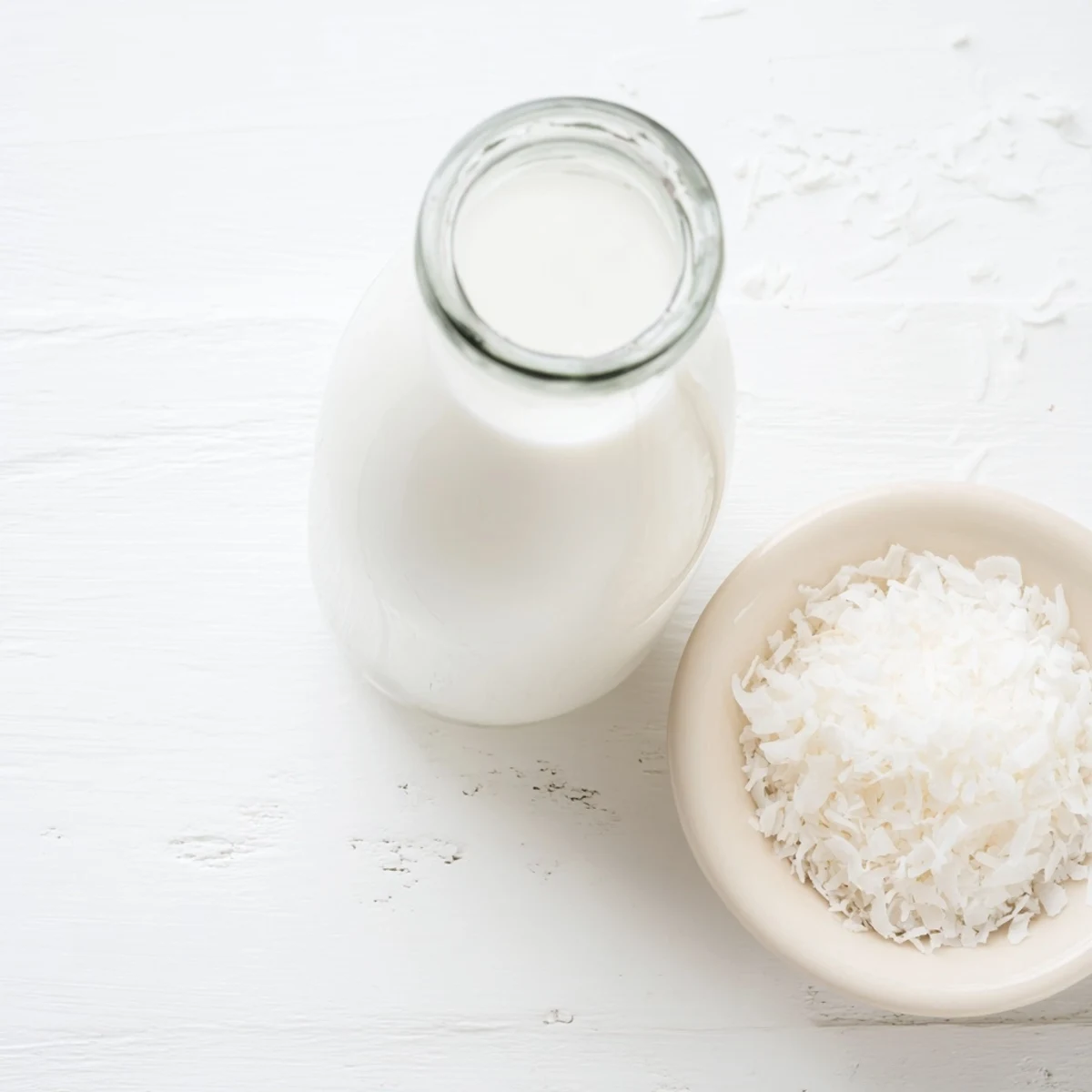
Glass bottles work best because coconut milk can pick up flavors from plastic. Keep it in the back of the fridge where temperature stays most consistent. The fresh version does not have preservatives, so use within four days.
- Make a double batch and freeze half in ice cube trays for later
- Shake vigorously before measuring as the cream rises to the top
- Trust your nose if it smells off, it is time to compost it
 Save to Pinterest
 There is something deeply satisfying about making something from scratch that most people only buy in cans. Once you start, you might wonder why you ever did it any other way.
Recipe Questions & Answers
- → Quelle température l'eau doit-elle avoir ?
-
L'eau doit être chaude mais non bouillante, autour de 70-80°C. L'eau trop chaude pourrait cuire légèrement la coco et altérer le goût, tandis qu'une eau tiède n'extrairait pas autant les arômes.
- → Peut-on congeler le lait de coco maison ?
-
Oui, le lait de coco se congèle très bien pendant 2 à 3 mois. Les petites portions sont idéales pour éviter le gaspillage. Après décongélation, secouez vigoureusement car la séparation est naturelle.
- → Comment utiliser la pulpe restante ?
-
Étalez la pulpe sur une plaque et séchez-la au four doux pendant 1-2 heures. Vous obtiendrez une coco râpée réutilisable pour les pâtisseries, granolas ou en enrobage de chocolats.
- → Est-ce plus économique que le lait du commerce ?
-
Absolument. Un paquet de coco râpée permet de produire environ 1 litre de lait, soit l'équivalent de 3 à 4 boîtes du commerce. La qualité supérieure et l'absence d'additifs sont des bonus appréciables.
- → Pourquoi mon lait se sépare-t-il au réfrigérateur ?
-
C'est tout à fait normal et le signe d'un produit naturel. La graisse de coco remonte à la surface. Il suffit de secouer vigoureusement la bouteille avant chaque utilisation pour retrouver une consistance homogène.
- → Peut-on remplacer la coco râpée par de la coco fraîche ?
-
Oui, râpez finement la chair d'une noix de coco fraîche. Vous aurez besoin d'environ 200g de chair pour obtenir un litre de lait. Le goût sera encore plus authentique et parfumé.